
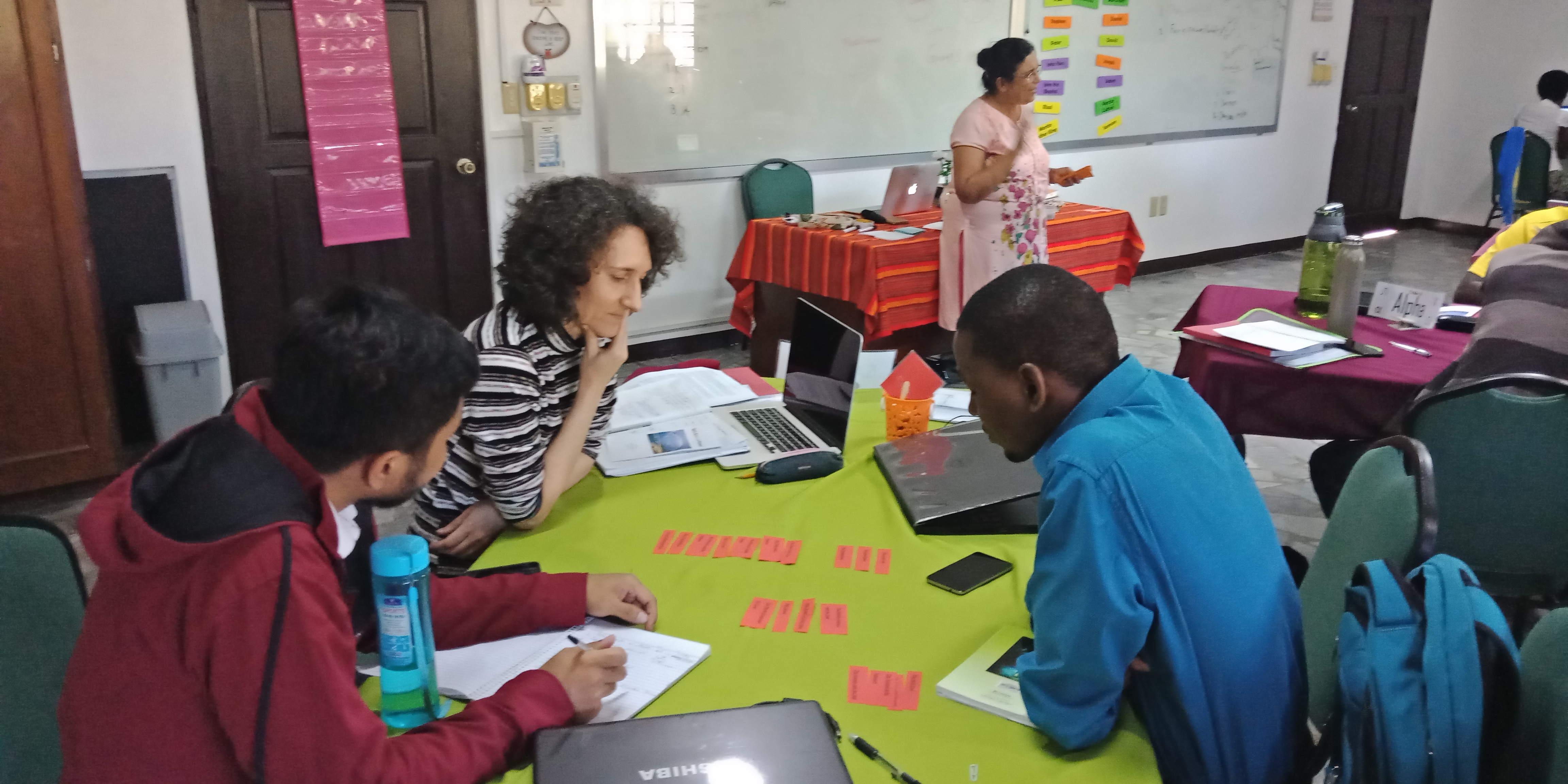
Taba Inductive Strategy is looking at specific items and making generalization Taba Inductive is originated by Hilda Taba and the main goal is inductive thinking
The Steps (CIA)
Phase 1:Concept Formation
1. Give the students the data set (at times students may bring their own data set)
2. Classify the data set into groups looking at common attributes
3. Name the groups
Phase 2: Interpretation
Students:
1.Compare the groups of data set identifying the similarities and differences 2. Explore the relationships between them
Phase 3: Application
- Look for concepts that emerge: Ask what does this mean?
- Make hypotheses and predictions: What would happen if . . .
- Find how the items are useful in life.
below is a step of using TABA with a subject and topic:
| Subject: Daniel and Revelation |
| Topic: Prophetic Symbols in Daniel and Revelation |
| Teacher’s Activity | Students’ Activity |
| 1. Gives Data Set to each student and instructs them to group the pictures of prophetic symbols in Daniel and Revelation into three and label each group. Pictures that is not related to any of the three groups are regarded as miscellaneous. | Receives the Data Set and listens to the instructions carefully. Silently groups the pictures of prophetic symbols of Daniel and Revelation into three. Next, students label each group and separates the pictures unrelated to each group as miscellaneous. |
| 2. Asks the students to tell the class a name of one of the groups of prophetic symbols in Daniel and Revelation and identify the characteristics within that group. | Tells the name of one group of prophetic symbols in Daniel and Revelation and identifies the characteristics within the group. |
| 3. Asks the students to identify the similarities across the groups of prophetic symbols of Daniel and Revelation. First is to try to identify the similarities and differences between Group 1 and Group 2, next is Group 2 and Group 3, then, Group 1 and Group 3. | Identifies similarities and differences across the groups of prophetic symbols of Daniel and Revelation. |
| 4. Asks students to explain the purpose of these prophetic symbols of Daniel and Revelation. | Explains the purpose of the prophetic symbols of Daniel and Revelation. |
| 5. Asks students what these prophetic symbols of Daniel and Revelation mean. | Explains the meaning of the prophetic symbols of Daniel and Revelation. |
| 6. Asks students about their conclusion on the relationship of the three groups of prophetic symbols of Daniel and Revelation. | Identifies the relationship between the prophetic symbols of Daniel and Revelation. |
| 7. Asks students what will be the implication if these prophetic symbols are not related to each other. | Discusses the implication if these prophetic symbols are not related to each other. |
 MY E-PORTFOLIO